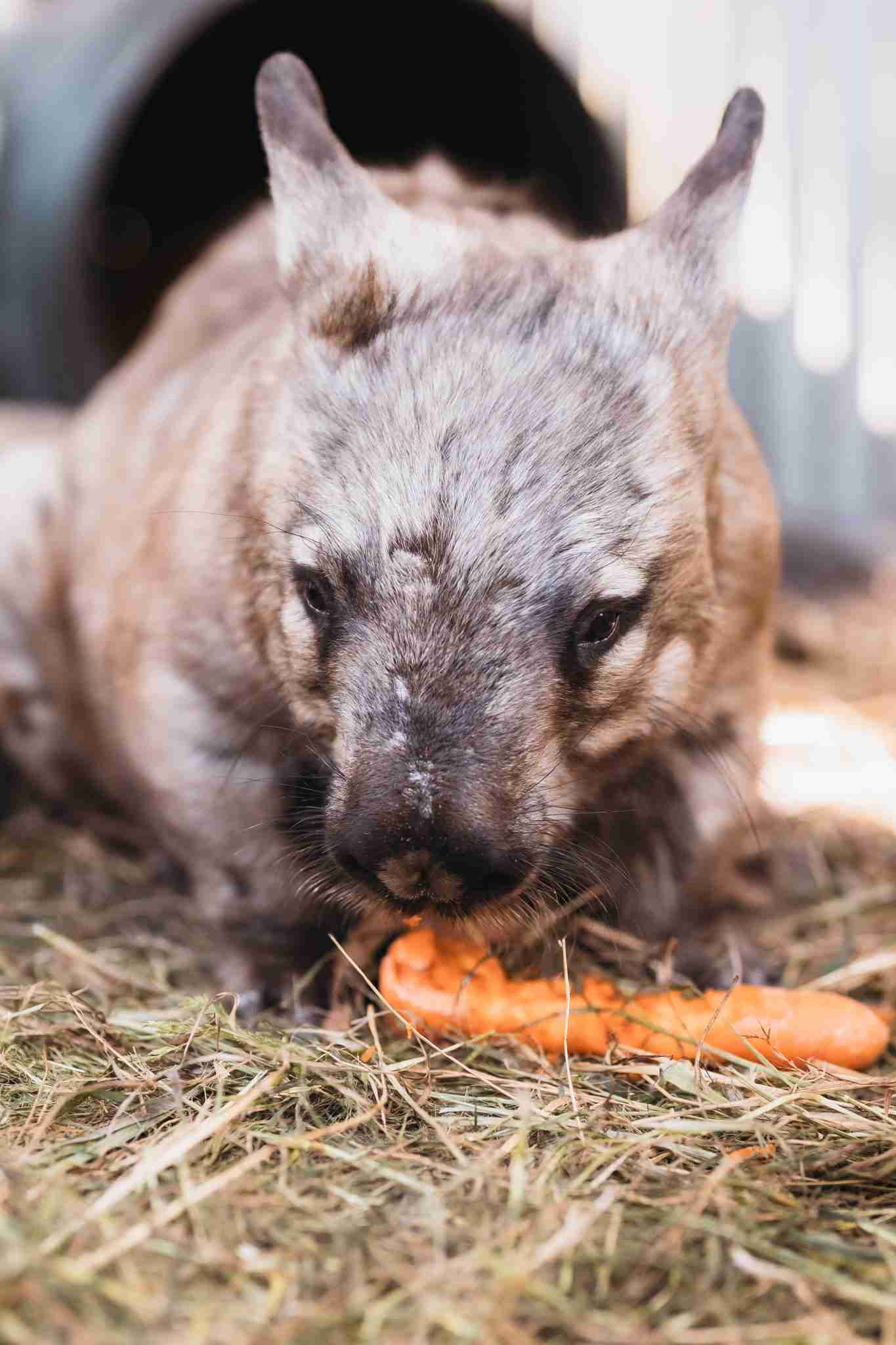
Southern Hairy-nosed Wombat
The Southern Hairy-nosed Wombat is a burrowing marsupial native to the arid and semi-arid regions of southern Australia. To escape the heat of the day, it shelters in large, shared underground tunnel systems called warrens. At dusk, it emerges to feed on tough native grasses, dry herbs, roots, and occasionally shrub leaves. Highly adapted to dry conditions, this wombat can survive with minimal water thanks to its efficient, low-moisture diet.
With strong forelimbs and sharp claws, it digs extensive burrows that not only offer protection but also improve soil health and provide shelter for other wildlife, making it an important ecosystem engineer.
Breeding occurs seasonally, usually between September and December, and is closely linked to rainfall. When conditions are favorable, a female gives birth to a single joey after a short gestation of around 21 days. The joey remains in the mother’s pouch for 6 to 9 months and continues nursing for several months after emerging.
Southern Hairy-nosed Wombats are found mainly in South Australia, with smaller populations in south-west New South Wales and south-east Western Australia. They live in open environments such as grasslands, shrublands, and dry woodlands with firm, sandy soils suitable for digging.
Although classified as Near Threatened, these wombats face several challenges. Habitat loss due to agriculture, competition with livestock and invasive rabbits for food, and diseases like sarcoptic mange all pose serious risks. In years of drought, breeding may not occur at all, making population recovery more difficult.