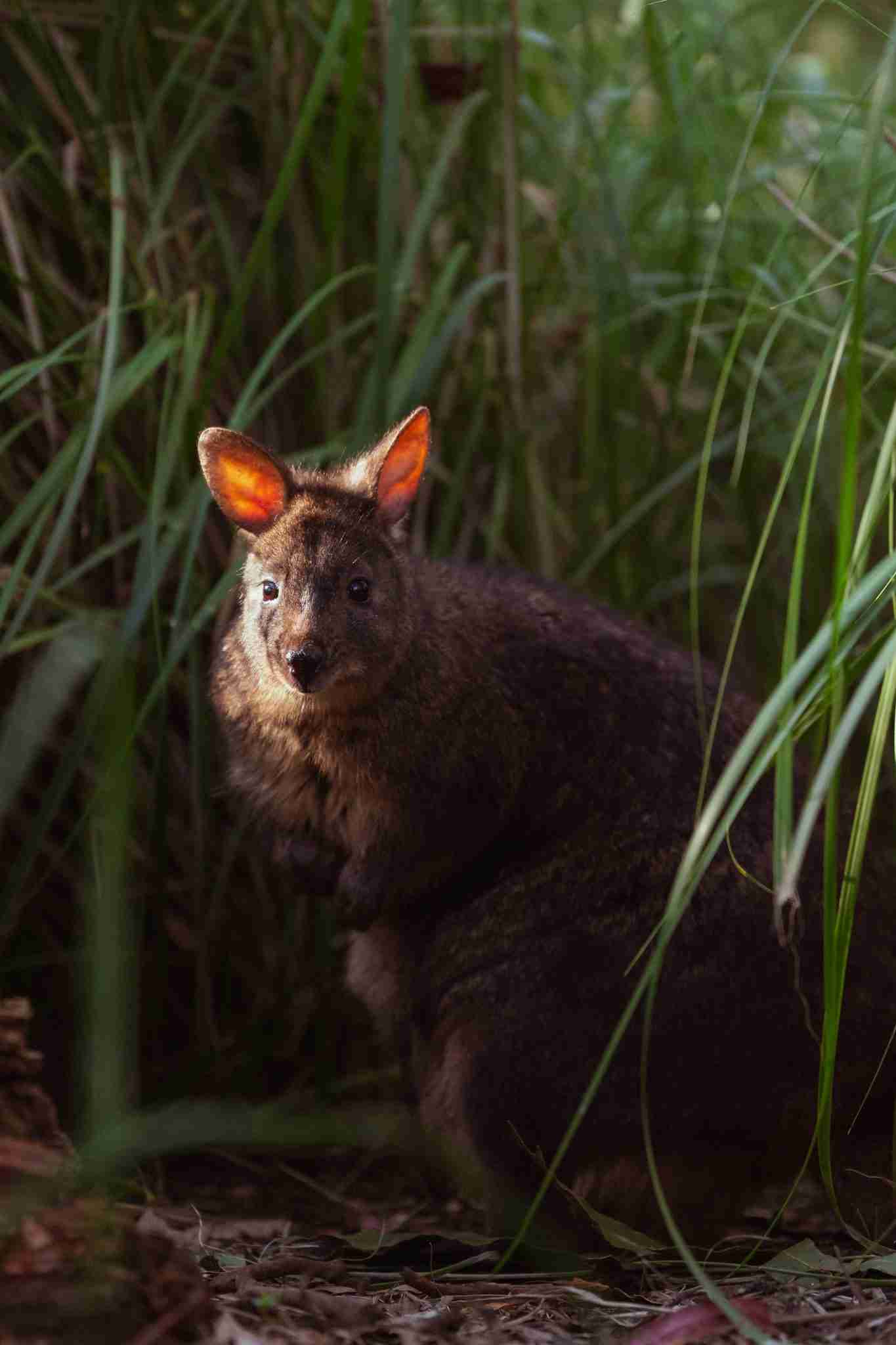
Pademelons
Pademelons are small marsupials belonging to the genus Thylogale, part of the kangaroo family. They are found in eastern Australia and Tasmania. Smaller than wallabies, they have rounded bodies, short tails, and powerful hind legs that help them move quietly through dense vegetation.
Pademelons live in forests and rainforests, preferring areas with thick undergrowth or fern-covered forest floors. They are shy and mostly nocturnal, spending the day hidden and emerging in the evening to feed. Their diet is plant-based and includes grasses, leaves, herbs, and shoots. Some species may also eat fallen fruit or moss, depending on availability.
After a short gestation of about 30 days, the female gives birth to a single joey, which climbs into her pouch and continues to develop for several months. The joey leaves the pouch around 6 to 7 months of age and is usually weaned shortly after. Most pademelons reach maturity by 12 to 15 months of age.
There are several species of pademelons. Across their range, pademelons play an important ecological role in forest ecosystems by grazing on undergrowth and helping to maintain plant balance.