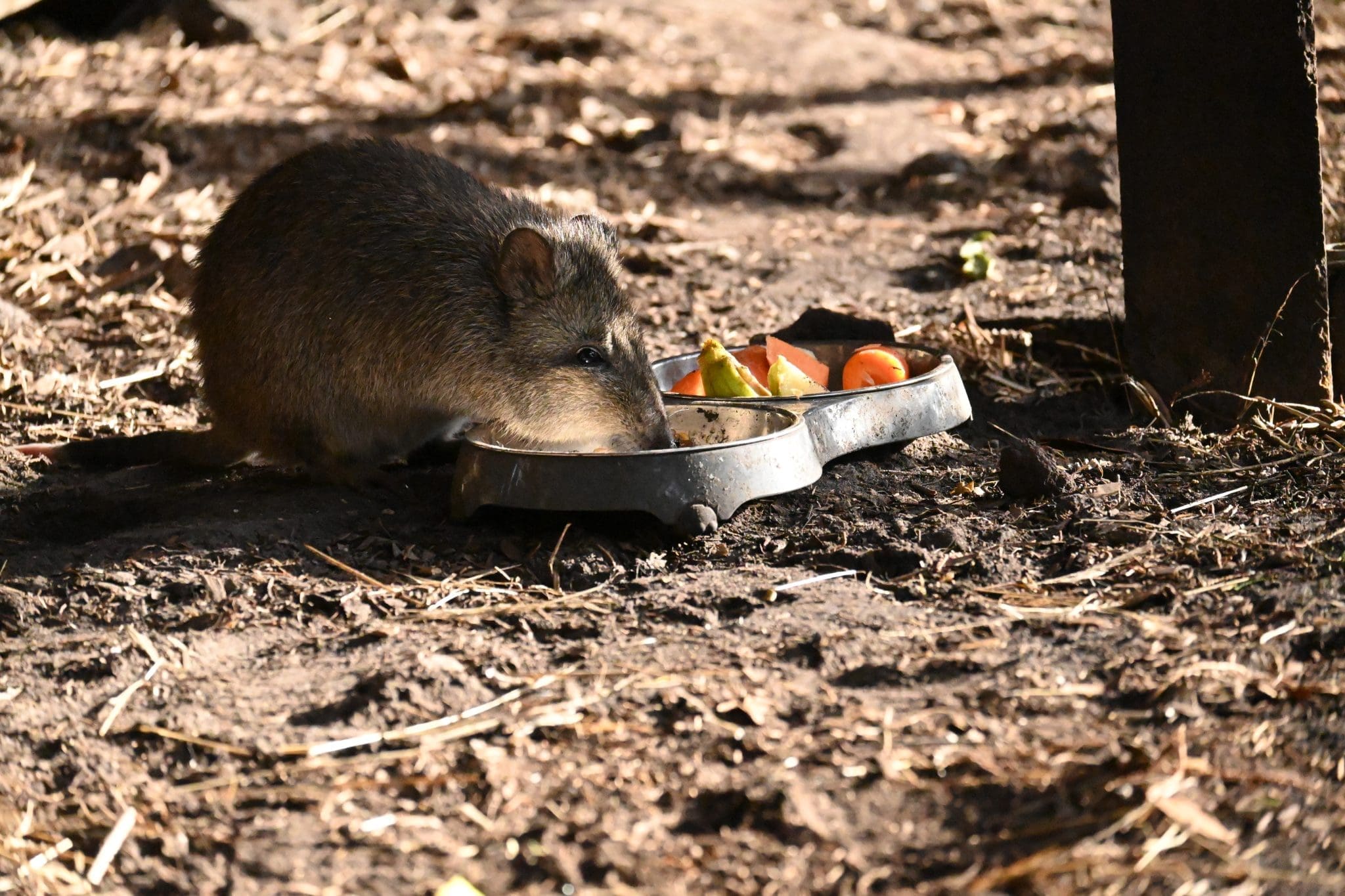
Potoroos
Potoroos are small, nocturnal marsupials native to Australia. Closely related to kangaroos and wallabies, they belong to a group known as rat-kangaroos due to their compact size, long hind legs, and tapering tails. Members of the genus Potorous, potoroos are shy, ground-dwelling animals that play a vital role in maintaining healthy forest ecosystems.
They spend the day hidden in dense vegetation (such as forests, coastal heathlands, or thick underbrush) and emerge at dusk to forage. Using their sensitive snouts, they dig through leaf litter and soil in search of food.
A large part of their diet consists of underground fungi, especially truffles, which they locate by smell. These fungi form symbiotic relationships with the roots of many native plants, helping with water and nutrient uptake. By consuming and dispersing fungal spores in their droppings, potoroos contribute significantly to forest regeneration. They also eat roots, tubers, seeds, and occasionally insects.
Potoroos are solitary and secretive. Like all marsupials, females carry their young in a pouch. After a short gestation of about 38 days (in species like the Long-nosed Potoroo), a single joey is born and remains in the pouch for several months. Some species can delay the development of a second embryo through embryonic diapause, allowing the female to time births based on conditions.
There are currently three known living species of potoroo:
-
Long-nosed Potoroo (Potorous tridactylus) – the most widespread, found in parts of eastern and southeastern Australia.
-
Gilbert’s Potoroo (Potorous gilbertii) – one of Australia’s rarest mammals and listed as critically endangered, with a small, isolated population in Western Australia.
-
Long-footed Potoroo (Potorous longipes) – restricted to small areas of forest in eastern Victoria and classified as vulnerable.
A fourth species, the Broad-faced Potoroo (Potorous platyops), is extinct, having disappeared in the 19th century.
Like many small marsupials, potoroos are under threat from habitat loss, bushfires, and introduced predators such as foxes and feral cats. Conservation efforts focus on habitat protection, predator control, and breeding and reintroduction programs to support surviving populations.