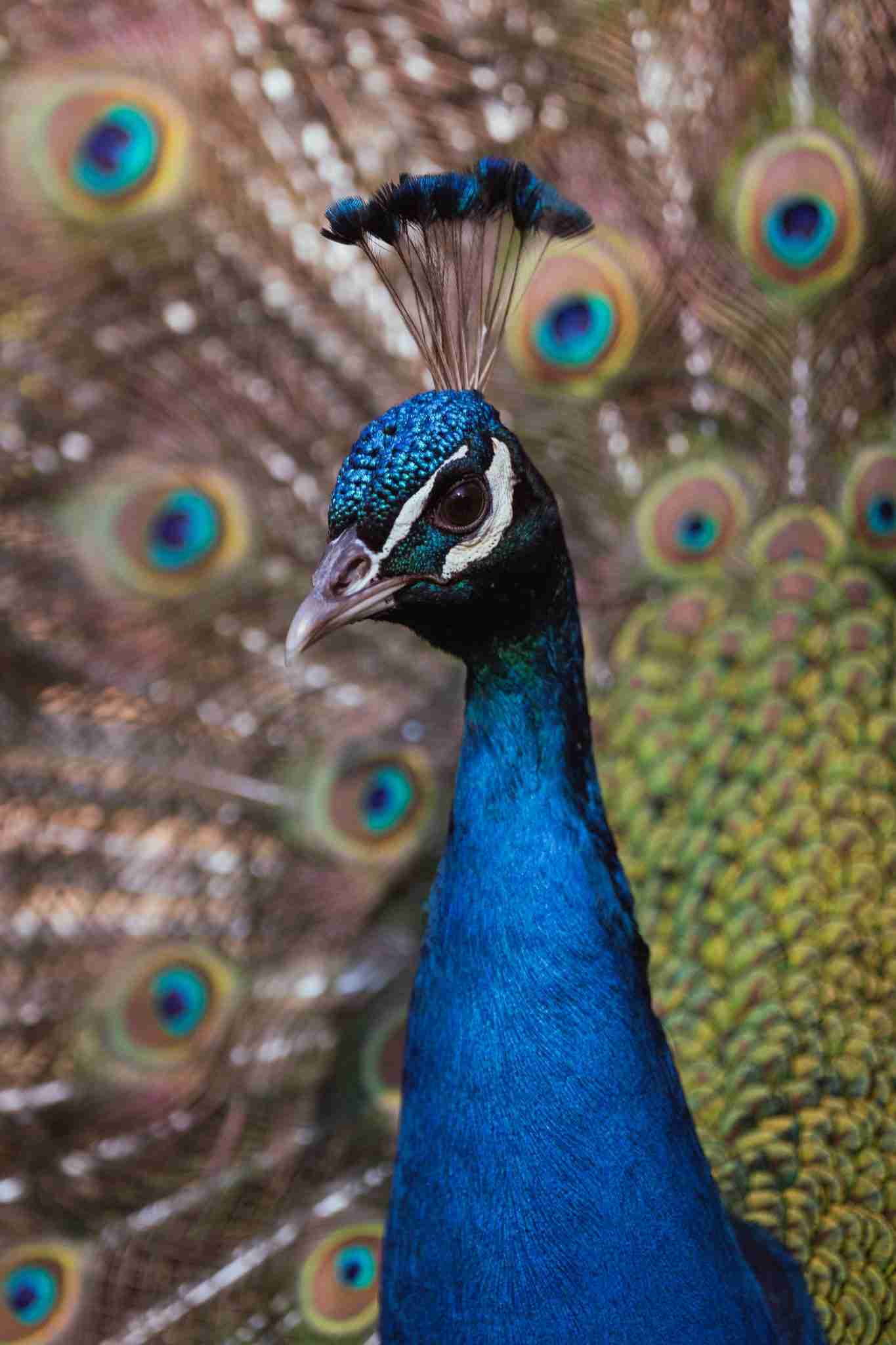
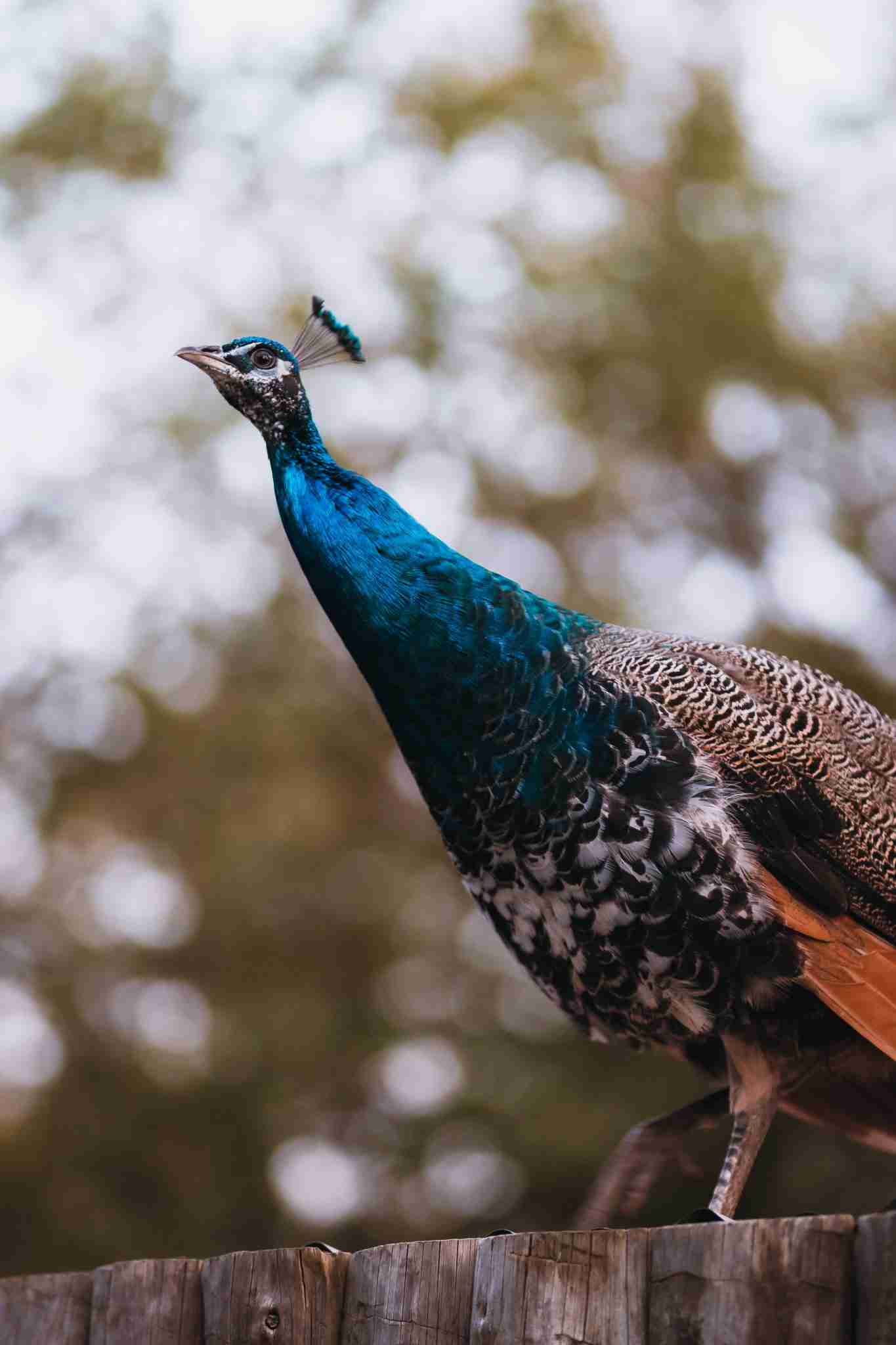
Indian Peafowl: Nature’s Living Jewel
Peacocks – or Indian Peafowl – are among the most strikingly colourful birds in the world. While they spend most of their time on the ground, they can fly short distances when needed, especially to escape predators or roost in trees at night. The male’s vibrant courtship display is iconic: when attracting a mate, he fans out his long tail feathers to create a brilliant wheel of shimmering colour. Females, by contrast, have shorter tails and more muted plumage in green and brown tones.
Peafowl are highly vocal birds. They produce a variety of calls, including their famous loud “scream,” a rapid “kok-kok,” and – when alarmed – a low, explosive honk.
They usually forage in small groups and are omnivores, feeding on seeds, insects, fruits, reptiles, and even small mammals. In the park, you’ll often see them enjoying one of their favourite activities — taking a dust bath to clean their feathers and control parasites.
Indian Peafowl are polygynous, meaning one male may mate with several females during the breeding season. After mating, the female lays 4 to 8 fawn-white eggs and incubates them for around 28 days. Chicks are able to fly at about one week old and become fully independent by two months.
Native to India and the drier regions of Sri Lanka, Indian Peafowl have also been introduced to many countries around the world. In the wild, they live in moist and dry deciduous forests near water, but they can also adapt well to farmland and areas with human habitation.
Did you know?
The peacock’s spectacular tail isn’t just for show. It actually signals the male’s health and genetic fitness! Scientists have found that males with more vibrant and larger tail feathers tend to have stronger immune systems, with more active lymphocytes (a type of white blood cell). So, that dazzling display is a way to impress females and show off good health!